JOBSMENIA FOR THE RIGHT JOB

A delicate ceasefire begins as the United States and Iran plan negotiations in Pakistan.
Latest news about Iran-US ceasefire
4/8/20261 min read

“According to international media reports…”
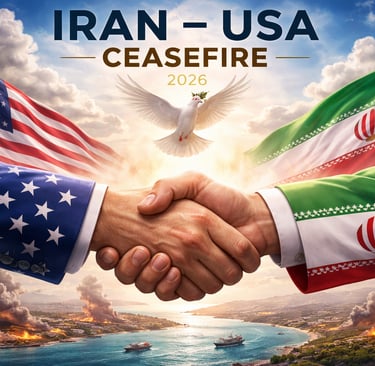
The United States and Iran agreed to a ceasefire on Tuesday, just under two hours before the deadline set by Donald Trump, who had warned Iran to comply or face severe military consequences. Early Wednesday, Trump celebrated the deal on social media, calling it “a big day for world peace,” and suggested that both Iran and the broader international community were eager for an end to the tensions.
He also stated that the U.S. would assist in easing congestion in the Strait of Hormuz and indicated that Iran could begin rebuilding efforts. According to the agreement, which took effect immediately, the U.S. and Israel would pause their bombing campaigns against Iran for two weeks, provided Iran fulfills its promise to reopen the vital shipping route—through which roughly 20% of global oil supplies are transported—for safe passage during the ceasefire.
Financial markets reacted quickly, with oil prices dropping sharply and stock markets rising. Brent crude oil fell by more than 13%, reaching $94.74 per barrel following news of the temporary halt in hostilities.
However, in the initial hours of the ceasefire, Israel contested claims that the agreement included a halt to its operations against the Iran-backed group Hezbollah, and continued its strikes in Lebanon on Wednesday.
The talks, reportedly facilitated by Pakistan, marked a dramatic shift from Trump’s earlier warning that “an entire civilization” could be destroyed if Iran failed to meet the deadline to reopen the strait. His remarks were criticized by Pope Leo XIV, who described the threat as unacceptable and urged all sides to pursue dialogue instead of escalation.
In announcing the agreement, Trump said the ceasefire would be mutual, noting that military goals had already been achieved and that both sides were progressing toward a broader, long-term peace arrangement in the Middle East. He also mentioned that Iran had introduced a “workable” 10-point peace proposal addressing key areas of past disagreement, which both sides have largely accepted. The temporary pause, he explained, would provide time to finalize a comprehensive peace deal.